PCR Troubleshooting: Common Causes of Failed Amplification and How to Improve Results
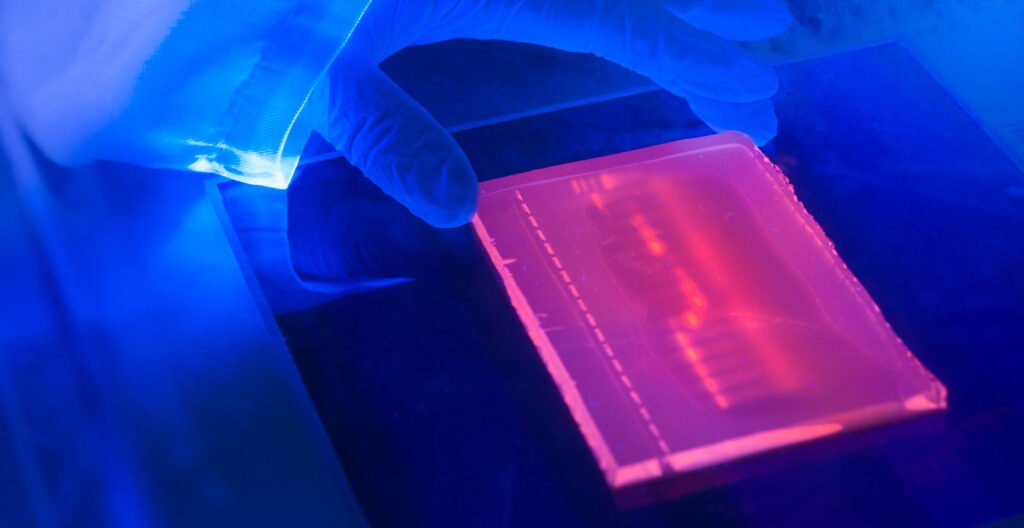
PCR failure can result from several factors, including template quality, primer design, reaction setup, reagent performance and cycling conditions. A useful first step is to confirm that the DNA or RNA entering the reaction is intact, sufficiently pure, and present at an appropriate concentration, while keeping other potential causes in mind.
What Causes Failed PCR Amplification?
Run the gel first. It tells you more in thirty seconds than another repeat of the reaction will.
A gel can narrow down the possibilities, but no single pattern points to only one cause. A blank lane may reflect insufficient or degraded template, missing or unsuitable primers, inactive reagents, inhibitors or an incorrect cycling setup. A faint band shows that some amplification occurred, but low template concentration, suboptimal annealing or extension conditions, reagent performance and pipetting variation may all contribute. Smearing can arise from nonspecific amplification, excessive cycling, degraded template, too much template or unsuitable reaction conditions.
Use the pattern as a starting point, then change one variable at a time so you can identify what improves the result.
Why Is My PCR Showing No Bands or Weak Bands?
No amplification can result from template problems, but it can also reflect primer design, reaction setup, reagent performance or unsuitable cycling conditions. Start by checking for degraded DNA, an under-concentrated sample, and residual chemicals from extraction; if the template checks are satisfactory, work systematically through the other variables.
Ethanol and phenol are common holdovers from extraction kits that never quite got washed out, and both interfere with polymerase activity at surprisingly low concentrations. EDTA is a subtler culprit—it chelates the magnesium the polymerase needs to function, so a trace amount can quietly prevent an otherwise well-designed reaction from working.
Heparin, sometimes used in blood sample collection, is a stronger inhibitor and may require additional purification before the sample is usable.
A simple diagnostic here is to dilute the template 1:10 and rerun it alongside the undiluted version. If the diluted sample amplifies better, you may have diluted an inhibitor along with the template, which tells you where to look next.
How Do I Fix Non-Specific Bands or Primer-Dimers?
An annealing temperature that is too low is one common cause of non-specific bands, although primer design, magnesium concentration, template input and cycle number can also contribute.
Gradient PCR is a useful way to test annealing temperature. Running the same reaction across a suitable temperature range can show where specific amplification is strongest, and background products are reduced.
If primer-dimers persist across the gradient, check the primers for complementarity, particularly at the 3’ ends, while also reviewing primer concentration and reaction setup. Primer design software can help identify problematic interactions and indicate whether redesigning the pair is the most practical next step.
Why Does PCR Fail With GC-Rich or Long Templates?
GC-rich and long templates can both be challenging, but not always for the same reason.
GC-rich sequences may form stable secondary structures that make strand separation and primer binding more difficult. Long amplicons place greater demands on polymerase processivity and are also more sensitive to template integrity, enzyme choice and extension conditions.
For GC-rich targets, additives such as betaine, DMSO or a dedicated GC enhancer may help reduce secondary structure. However, optimise concentrations and cycling conditions for the polymerase system being used.
Long amplicons require a different approach: use a polymerase formulated for long-range amplification, start with a high-quality, intact template, and allow an extension time appropriate to the enzyme and amplicon length. Targets beyond roughly 3–5 kb may push standard Taq beyond its most reliable working range.
How Does Template Quality Affect PCR Success?
A well-designed reaction can still fail if the DNA or RNA going into it is already compromised. Checking the template takes minutes and rules out a whole category of problems before they waste a run.
Purity and degradation are different problems, and a template can fail from either one. Start with an A260/280 ratio near 1.8; a value below 1.8 usually indicates residual protein or phenol left over from extraction.
That number says nothing about whether the DNA is intact, however, which is what the gel is for. You want a sharp, high-molecular-weight band, while a smear can indicate degradation regardless of how clean the purity ratio looks.
If both checks pass but the reaction still underperforms, review A260/230 too, as it can detect leftover solvent that the other ratio does not.
RNA has one more potential issue: genomic DNA can co-amplify and produce a band that looks like success. A DNase step before the reaction, rather than afterwards, is therefore standard practice for RNA templates specifically.
Which Reagents Should I Check First When PCR Fails?
Once you’ve ruled out the template and primers, the polymerase is usually next on the list—not because it fails often, but because it can fail quietly.
Repeated freeze-thaw cycling or storage above the recommended temperature can gradually reduce polymerase activity. A reaction may therefore go from reliable to inconsistent over time without an obvious cause. Apollo’s polymerase range covers standard Taq through high-fidelity and hot-start formulations if you need fresh stock.
Poor storage or contamination can also affect dNTP performance, so aliquoting working stocks is sensible laboratory practice. Apollo’s dNTP range is available if you need a fresh batch.
Buffer and magnesium concentration are harder to diagnose in isolation. If everything else checks out, preparing a fresh master mix from confirmed reliable stock can be more informative than trying to isolate the buffer component alone.
Primers are generally stable when stored correctly at -20°C. Aliquoting can reduce handling and contamination risk, but repeated freeze-thawing should not be the primary explanation for reduced annealing efficiency without evidence of another storage or handling problem.
How Do I Optimise PCR Cycling Conditions?
Default cycling programmes are a starting point, not a fixed rule. The settings should reflect the primer pair, polymerase system and amplicon being used.
Annealing temperature strongly influences specificity, but the best starting point depends on the primer pair, polymerase, and buffer system. The calculated Tm provides an initial guide; check the manufacturer’s recommendations and use gradient PCR to find the temperature that best balances yield and specificity.
Extension time also depends on the enzyme and amplicon length. One minute per kilobase is a common starting point for standard Taq, but high-fidelity and long-range enzymes can run at different rates, so follow the relevant protocol.
When Should I Consider a Different Polymerase?
Standard Taq handles routine, short amplicons well, which is exactly why it is the default. However, some situations call for a different formulation.
Multiplex reactions and low-template samples may benefit from a hot-start formulation. It remains inactive until the first denaturation step, helping limit nonspecific priming while the reaction comes up to temperature.
Anything intended for cloning or sequencing may call for a high-fidelity, proofreading enzyme instead, as base-call accuracy matters more in these applications than speed.
For amplicons beyond the practical range of standard Taq, a long-range formulation helps the polymerase reach the end of the strand without stalling. Apollo’s polymerase range covers all three of these options, as well as the standard enzyme.
Find the Right Reagents for Your PCR Workflow
Successful PCR depends on using reagents suited to your template, target and application. Apollo Scientific supplies standard Taq, hot-start, high-fidelity, and long-range polymerases, along with dNTPs and other essential PCR reagents.
Explore Apollo Scientific’s PCR reagent range or contact our team for help identifying the most suitable products for your workflow. You can contact us by email at sales@apolloscientific.co.uk or phone us on +44 (0)161 406 0505. For companies in China, please contact us via email at apollo@titansci.com. We look forward to helping you with your enquiry.
FAQs
What is the most common cause of PCR failure?
No single cause is most common in every PCR workflow. Template quality and inhibitors are frequent contributors, but consider primer design, reaction setup, cycling conditions, and reagent performance when troubleshooting.
Can old or freeze-thawed primers cause PCR to fail?
Primers are generally stable when stored correctly, and repeated freeze-thawing alone is usually not a major cause of degradation or reduced annealing efficiency. Aliquoting remains good practice because it limits repeated handling and helps reduce contamination risk.
Why does PCR work for one sample but not another?
If the same master mix and cycling conditions work for other samples, the unsuccessful sample’s template quality, concentration or inhibitor load becomes a strong possibility. Sample-specific variation, pipetting and primer-target differences should still be considered before drawing a firm conclusion.
How do I know if PCR failure is due to contamination or technique?
Add a known positive control to the run. A control that amplifies successfully suggests the problem is with the specific sample rather than the reagents or the general cycling protocol.
A no-template control can also help identify contamination. If amplification occurs in the no-template control, one or more reagents or the reaction setup may have been contaminated.
What annealing temperature should I start with when troubleshooting?
Use the primer melting temperatures alongside the recommendations for the chosen polymerase and buffer system. Because the optimum can vary between reaction systems, gradient PCR is the most reliable way to identify a suitable annealing temperature experimentally.